
Math Classics

Hello! I'm new to posting, but this is an age-old question! I found a sheet that has the "Recommended High School Level Classical Leadership Curriculum" on it. I am interested in the suggested math readings; however, only the mathematician is listed--not their writings. I'd LOVE to read the "math books" in order, but haven't the faintest idea what the books are to look up. I've spent hours searching today and have come up w/ nothing! Here are the mathematicians (under the heading "Algebra") I'm looking for: Pythagoras, Plato, Aristotle, Archimedes, and Nichomachus. If you know what "math" books to study from this list, and maybe where to find them, I'd be very grateful! Enough wasted internet time!!! :)

One last question. . .

Hi! I just had one other question pop up while I was making banana bread for breakfast this morn. Would you be concerned about trying to read the math and science books in order of history--so one could build upon each other, so to speak--or would you just pick one and start? As I've thought about my oldest boy--apprentice scholar is the better term (this is a new one I'm getting used to--10 years ago, it was just scholar). I know it's ultimately up to HIM what to study, but my job is to INSPIRE (guide a bit, if needs be). What would you recommend? Historical or whichever is of interest? I think I know the answer, but, I don't know, I guess I get stressed thinking I have ONE chance to get this "right", and I want to help my children get the most out of their time at home before they "grow up" and life intervenes!!! :) Again, thank you all so much for helping!
Debbi

How to start

Good question, and good answers already. Try not to think in the all or nothing realm, all this way or all that way and none of the other. The two formats can be intertwined, here is how - for kidschool and read-aloud introduce and read things in order, for their personal study let them pick and choose according to interest.

For kidschool don't try to cover everything and thoroughly exhaust all available info in a time period, just hit the highlights, the most significant people and ideas. The rest can be filled in later as you and they cycle through. Using a timeline is also helpful when they are jumping around because as you all use it you can see and discuss connections.

This is also a good reason why the parent should read a brief historical survey first so that you have an overview in your mind to guide you in discussing and seeing how things fit together. It keeps you at least one step ahead of wherever they are at, essential for mentoring.

If you haven't gotten these yet then do - books by Jeanne Bendick, Archimedes and the Door of Science, Galen and the Gateway of Medicine, Along Came Galileo. They would be read in that order, they include lots of history and mention other important people. It would be a great place to start for science. Different author same style - The Mystery of the Periodic Table. That one is progressive, the first part can be read and understood by the younger kids, later chapters for older kids, but a great history of chemistry. With those 4 you cover biology, physics and chemistry introduction and they are very engaging.

comfort

Several years ago I read a quote in Homeschool Digest that helped me relax and get working. It was something like this:

Research your available options, choose one prayerfully, and then do it. Move forward. Time passes, so you need to keep going. If you find out later that a different choice might have worked better, don't worry about it. You did the best you could with what you knew at the time. There is no "one best way for every child". You chose something that worked; forgive yourself for not being perfect and go on from here.

If by some chance you omitted some piece of information that your children need later, they can still learn it later. In fact, they're more likely to learn and remember it later, because then they Need it. Do the best you can to Inspire your children to Want to know.

re:comfort

Thank you for the soothing words. Years ago, I read a very unremarkable book that had one idea/feeling that has stuck with me. I can't remember the name of the book, but I can remember the main character (a mom years ago) lamenting over and over about stopping the clock so she could decide if whatever was happening in her life was right or not. And, we can't stop the clock--time goes on, children grow up, and life won't stop for us. I forget to place my trust and faith in the proper sphere sometimes. I really appreciate you and Kelli for your support. Best of wishes to you!

Math Classics

I haven't looked at that paper for awhile but that list seems more like a geometry list, just missing Euclid. Algebra had a few Greeks that started playing with it (not on that list) but it was the Arabs and Hindus that really developed it.

Archimedes' The Sand Reckoner is his work on exponents.

Nichomachus' writing is Introduction to Arithmetic. Nichomachus was a later Pythagorean and his work is what we know about the works of Pythagoras and his followers. The Pythagorean Theorem proof can be found in Euclid (proposition 47), the algebraic way of writing it came much later.

These are both found in The Great Books, and possibly other places but you can usually find these in the library.

I have no idea which writings of Plato and Aristotle would apply. The Greeks are known for geometry and the Arabs for algebra.

I don't know your background, your interest and phase levels, but you might consider starting with The World of Mathematics by Newman. Just start with the first volume. They are collections of writings by and about mathematics and mathematicians. Also, Men of Mathematics by E. T. Bell, or Men of Numbers by Muir. I have spent the last two years studying and teaching the history of mathematics and science and would be happy to give you any other recommendations.

Background, phases--where we are

Thank you, Kelli, for responding! My background--hectic! :) I have 7 children--3 through almost 14. I have homeschooled the whole way, but not following TJEdRefers generally to the concepts presented in the book A Thomas Jefferson Education, written by Dr. Oliver DeMille. We also have an Introduction to Thomas Jefferson Education available elsewhere on this site.. I heard about it years ago, but, although we loved the concepts, my husband and I were wary. We (I should say, "I") tried other ways, and we always seem to come back to TJEdRefers generally to the concepts presented in the book A Thomas Jefferson Education, written by Dr. Oliver DeMille. We also have an Introduction to Thomas Jefferson Education available elsewhere on this site. and its simplicity. I'm going to spend the next few weeks immersing myself in the books again to get a better picture of what I'm trying to accomplish. But, time goes on, and my children grow whether I'm "prepared" or not. I think my oldest is about ready to leap into the Scholar Phase. It's been fun to watch him. My oldest 5 are boys. Most of the boys are in the LOL phase, with my youngest boy and the girls being in the Core, I believe. My youngest boy is borderline. I am concerned about their math skills, as math practice has been sporadic over the last few years (two new babies, Mom's health, and several out of state moves), and my boys are interested in fields that will require a competence in math--aviation and the sciences. I agree that a marvelous way to understand math is to read the math classics--hence the question.

My husband and I know of no other way to learn math than by "bookwork," but I do believe that if they (and WE) read the mathematical classics in order of history, we will all gain a greater understanding about how it all "works." I am trying to build a library to encourage this. I'm not exactly interested in the Great Books series, as I understand that it is a collection of large volumes with many different works in one volume. Difficult to curl up on a sofa or in bed. My children are VORACIOUS readers and I want them to be able to easily handle the book--which is why I'm looking for individual works as much as possible.

I'm trying (somewhat unsuccessfully) to not panic now that my oldest is considered HS! I want to make sure he has every resource I can provide for him in order for him to fly during his Scholar phase. I can see him do it--but I'm not quite sure what books to have available. As I said, we're interested in the development of mathematical ideas in a historical context. And, since you have a background in science, I'd love input on that area as well! I have a few budding scientists who would DEVOUR whatever I find.

I hope this helps you understand where we are a little better. And, of course, I have at least ONE more move ahead of me next year, but we hope that's the LAST for a long while. I'm trying to safeguard stability amid our chaos. I really appreciate any help you give! I don't necessarily need to stay with the authors that I mentioned in the earlier posts--they are just what I had available to me.

One last thing--in an earlier post you wrote, you mentioned a newsletter written by someone named Donna. I am unfamiliar with this newsletter. Is it still going and how do I find out more about it?

Again, thank you from the bottom of my heart!

14 yo and math

It was a beautiful thing to see my 15 yo get interested in Math all on his own last year! It does happen! Also, my 10 yo daughter took a year off of math, (she had hit a wall and I saw it) and then seeing her older brother get excited about fractions inspired her to give it a try. (She wants to do everything she sees) So don't worry, Inspire!

Cathryn
"A popular Government, without popular information, or the means
of acquiring it, is but a Prologue to a Farce or a Tragedy; or,
perhaps both. Knowledge will forever govern ignorance: And a
people who mean to be their own Governors, must arm themselves
with the power which knowledge gives."

-- James Madison (letter to W.T. Barry, 4 August 1822)

almost forgot

The Number Devil - fiction, number theory
String, Straightedge and Shadow - history, geometry

Math and science

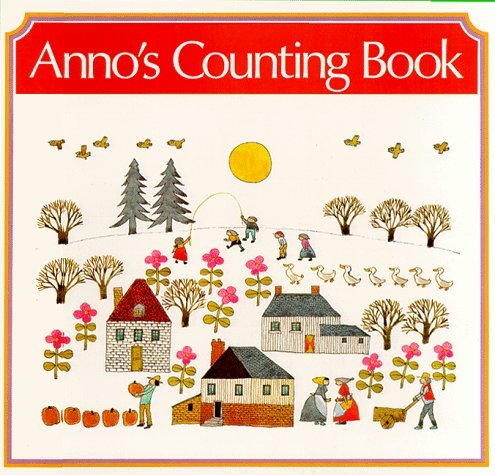
Practice of math facts is important but doesn't have to be boring and strictly book work. I think the best way to learn and practice is with games - Games for Math by Peggy Kaye, Math Card Games by Joan Cotter (www.alabacus), and many others I am sure you have seen. Any games involving money, points or sizes are good. Playing chess involves mathematical and strategic thinking. Of course cooking, puzzles, blocks, balancing, sorting, construction toys, etc., are wonderful for developing math concepts for Core kids.

Get biographies -
Starry Messenger by Peter Sis (Galileo)
The Librarian Who Measured the Earth (Eratosthenes)
Mathematicians Are People Too (Historical Connections from AIMS Educational resources are the follow up activity books)
the other biographies I recommended are good for older scholar and adults.
This site has great info for the more advanced - http://turnbull.mcs.st-and.ac.uk/~history/.
wikipedia.
Breakthroughs in Science by Asimov
Dr. Posin's Great Men of Science by Posin
God Created the Integers by Stephen Hawking (later scholar and adults, brief biographies and excerpts of their works with commentary)

historical surveys -
The Story of Science - series by Joy Hakim
The World of Mathematics is 4 small, but thick volumes for older readers. The first articles in Vol. 1 give a great overview of the history of math.
The Story of One - DVD check your library
John Hudson Tiner writes great math and science biographies and historically based texts for Christians (5th grade and up). Also, Joyce McPherson has written biographies for Christians - Pascal, Newton and Durer (Renaissance artists were also mathematicians and scientists so don't forget them).
The Timetables of Science is a great reference for math and science.
The Story of Math for Young People by Rogers

Fiction math classics - (read together if possible)
Flatland by Edwin Abbott is about geometry and human nature (we built the shapes with pick up sticks and it was my 9yr old daughters favorite)
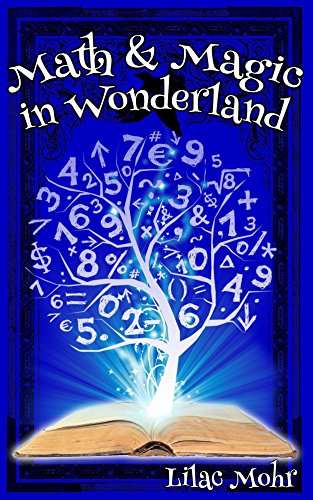
Alice in Wonderland and Alice Through the Looking Glass (size is a math concept, so is speed)
Phantom Tollbooth

www.homesciencetools.com - great resource for homeschoolers - kits, books, equipment, and info

Mathematics a Human Endeavor by Harold Jacobs is a liberal arts math text for high schoolers.
How Science Works, How Nature Works, How the Body Works, How Math Works - all published by Readers Digest.

Is that enough? Are you overwhelmed yet? Just take it slow and easy and check your library.;) Create your own timelines and as you find new names to add check the library and other sources to find out about them, start with the most significant. Do stuff, find out about people, reading their works is for scholar and depth. For my scholar class I started with a paragraph or two from an original work and had them rewrite it in their own words. That is very challenging! This was a recommendation from a GWCAn abbreviation of George Wythe University (formerly George Wythe College), a private liberal arts college headquartered in Cedar City, Utah, which Dr. Oliver DeMille helped found, and where he formerly served as president. There are also plans underway for building a much larger campus in Monticello, Utah, and plans have also been announced for a remote campus in Alberta, Canada. Master Mentor. Reading the whole work should probaly wait until late scholar - 16+, it depends on the student and the work.

That should give you a good start. I am sure you will find more.

Kelli

THANK YOU!

Kelli, thank you so much for your time! We'll definitely look into these recommendations. I appreciate your time and effort!
Debbi

Science books

Your sons might like _Realm of Numbers_ by Asimov. It explains clearly and engagingly a lot of numerical concepts. Asimov wrote a couple of other _Realm of_ books, too, about math.

Dorling Kindersley books, particularly the Eyewitness series, are good for building interest and a basic knowledge (really really good for Love of Learning). Usborne has really good science experiment books, again, for LOL Phase.

My oldest two children are in Scholar Phase and are taking college courses online for math and science, because they are interested and because I also have seven children of various ages and I don't have time to give them intense instruction. (Besides which my 16yo has moved beyond listening to his mother academically.) Daddy insists on getting official credit for the learning, at least enough knowledge to pass a CLEP test. My dd started doing algebra as an online course at age 14. (Clovis Community College is the cheapest we found for this.)

I think the newsletter you mean is "Epiphanal Living", sent out by Donna Goff (I think she posts here as Donna Gene). It's from the Mentoring Our Own Yahoo Group, which used to be very active. It's now moderator posts only, but the archives are extensive and would answer a lot of questions.

There are lots of ways to do science and math as Scholars; apprenticing in the trades, working with food, crafts, gardening, farming, just about any productive pursuit will lead to science and math learning. There are classics in all these areas, too, not just the old old texts from ancient times. Applied math counts!

THANK YOU

Thank you for your response. I'm sure my boys will love the Asimov books! Thank you for reminding me that LIFE itself is a great teacher! Sometimes, I forget that!
Debbi

Project Gutenberg

Most of these authors are available free online from Project Gutenberg and various university websites. Nichomachus, however, you will have to either buy or get from the library; it is not, as far I know, available online. You can get most of these authors in the Great Books set (many libraries have such a set, published in the 1950s I think).

Thank you very much for

Thank you very much for your ideas! I appreciate the help!